
The usual causes
- Over-fermented dough. This is the most common reason. The gluten network is stretched out and cannot hold the gas. The dough often feels slack and sticky and smells sharp or boozy.
- Not enough tension when shaping. A loose shape has nothing to hold it up, so it spreads sideways in the oven.
- A weak or tired starter. Little lifting power from the start means the dough never builds enough strength.
- Too much water for the flour. Very wet dough spreads easily, especially if shaping is not firm.
- The oven was not hot enough, or there was no steam. Steam and strong heat at the start let the loaf rise before the crust sets.
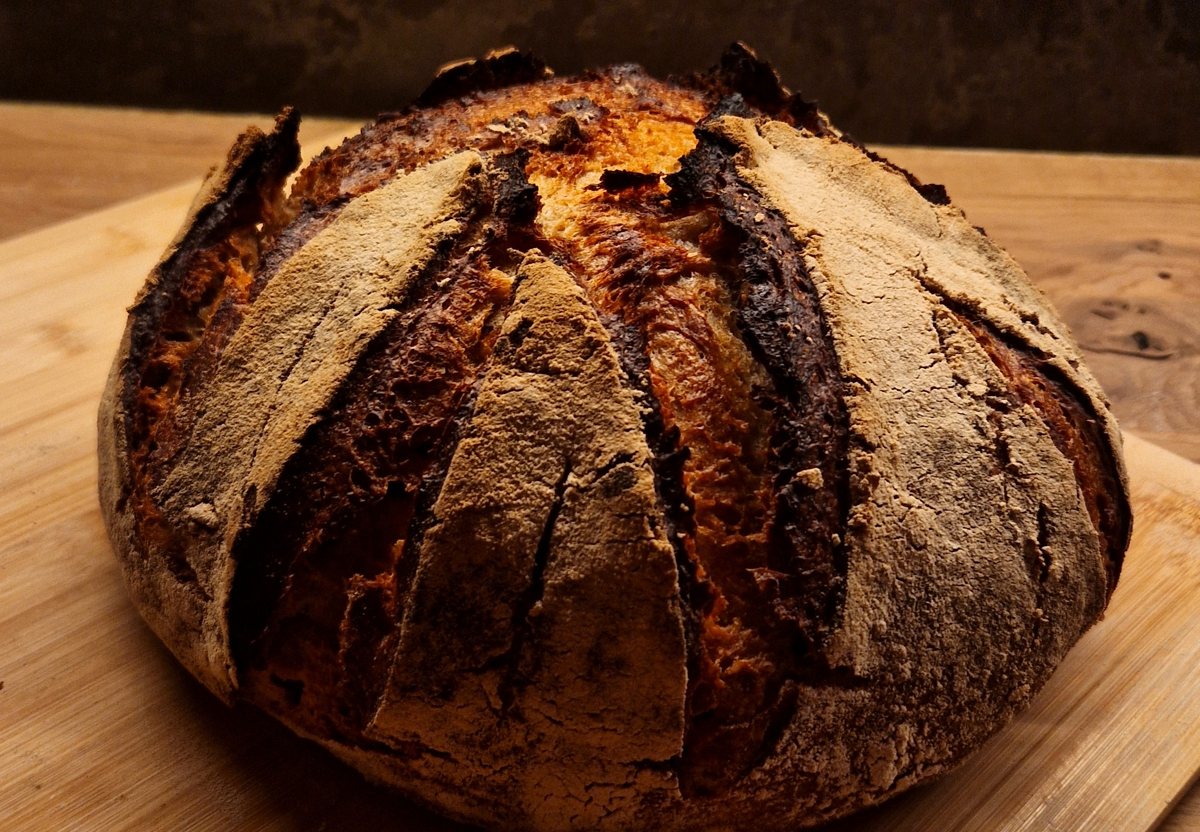
If you are unsure, bake earlier next time. Slightly under-fermented dough still rises. Over-fermented dough cannot recover.
How to tell which one it was
- Slack, sticky, sour smell: over-fermented. Shorten the rise next time.
- Dough felt fine but spread right after shaping: shaping tension. Shape more firmly and keep a taut surface.
- Dough barely grew at all: weak starter or a room that was too cool.
- Dough was good, but the loaf did not jump in the oven: check preheating and steam.
The Starter Kit includes the poke test for dough readiness, shaping guidance and a troubleshooting table (Module 5) that points every flat loaf to its cause.
Get the Starter Kit — €16