
Dense and compact: the usual causes
- The starter was not active enough. If it had not clearly risen before you used it, the dough has little lifting power. Check the starter first, before you blame the recipe.
- The dough was under-fermented. It went into the oven before it had grown and gotten bubbly. The crumb stays tight with small holes.
- The dough was over-fermented. The gluten tired out and the loaf lost its lift, so the crumb turns heavy and sometimes has a dense band at the bottom.
- The dough was too stiff. Too little water for the flour gives a tight, compact crumb.
Gummy or “raw” crumb: the usual causes
- You sliced it too early. The inside is still setting while it cools. Let the loaf cool completely before you cut it.
- It was baked a little too short. The crust looks fine, but the middle is still wet. Bake a bit longer, or until the loaf sounds hollow when you tap the bottom.
- The dough was very wet. High-water doughs need more bake time and more cooling time.
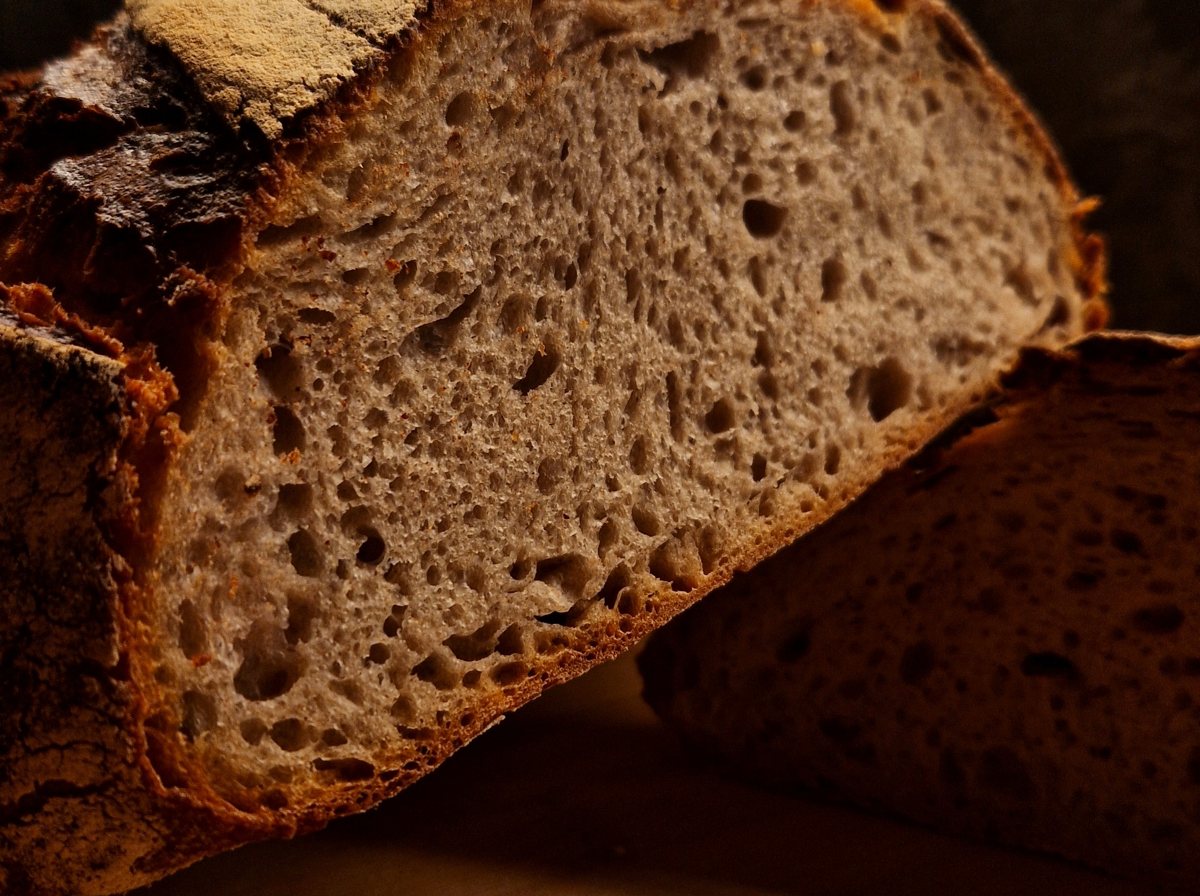
Change one thing at a time. If you change the starter, the water and the bake time together, you will not know what fixed it. Fix the most likely cause first and bake again.
How to check
- Starter: does it form a clear dome after feeding? If not, it is not ready to raise a loaf.
- Dough before baking: press a floured finger gently into it. It should spring back slowly, not at once and not never.
- Loaf after baking: it should feel light for its size and sound hollow when you tap the bottom.
The Starter Kit includes a full troubleshooting table (Module 5) that matches every symptom to its cause and its fix, plus the dome test and the poke test that make these checks easy.
Get the Starter Kit — €16